Adrian O'Dell • January 19, 2027
The 90-Second Project Film: Using Drone Video to Win Your Next RFP
FAA Part 107
MBE Certified
EDGE Certified
OSHA 10 Trained
L1 Thermographer
A 60 to 120 second project film shows a selection committee scale, quality and site control faster than a page of photos. Committees often spend only a few minutes on the past-projects section of a proposal. A short aerial film, linked from the proposal and played at the interview, gives them the project in the time they actually have. Here is how AEC firms plan one, and how our aerial videography fits in.
Why video works in a proposal
- Scale reads instantly. One slow aerial move shows the size of a site better than any photo.
- It shows how you work. Clean laydown areas, organized crews and safe sequencing are visible from the air.
- It travels. The same film plays in the interview, on your website and in award submissions, and a vertical cut runs on LinkedIn.
Plan it at kickoff, not closeout
The strongest project films are planned before the job starts. If the only footage is from the ribbon cutting, the story is missing its middle. Agree on a handful of milestones at kickoff and fly the same positions each time:
- Site before work starts, for context and the "before" shot.
- Earthwork and foundations, where scale is most visible.
- Structure and the key lift or milestone, such as topping out or a major equipment set.
- Envelope and site work.
- The finished project, inside and out, in good light.
Repeat positions also give you a time-lapse almost for free. If you already run a progress monitoring program with us, the milestone footage can come from those visits.
A structure that works in 90 seconds
- 0 to 10 seconds: the finished project from the air, so the committee knows where this is going.
- 10 to 60 seconds: the build in four or five beats, each a few seconds of the milestones above.
- 60 to 80 seconds: the details that matter to this client: a complex lift, a phased occupied site, a tight urban footprint.
- 80 to 90 seconds: the finished project and your logo.
Keep text on screen short. Committees watch with the sound off as often as on.
Example: a utility-scale solar build
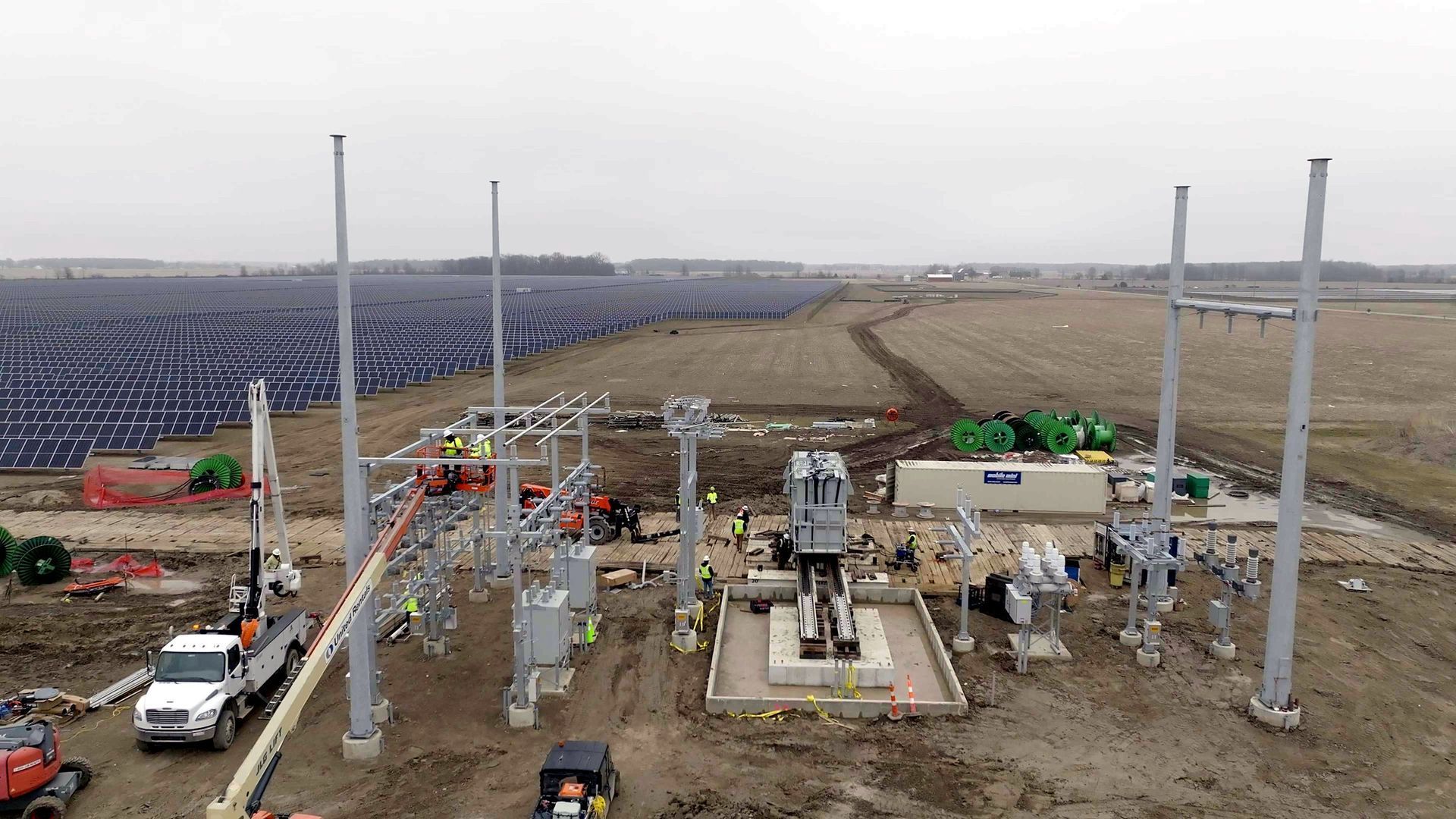
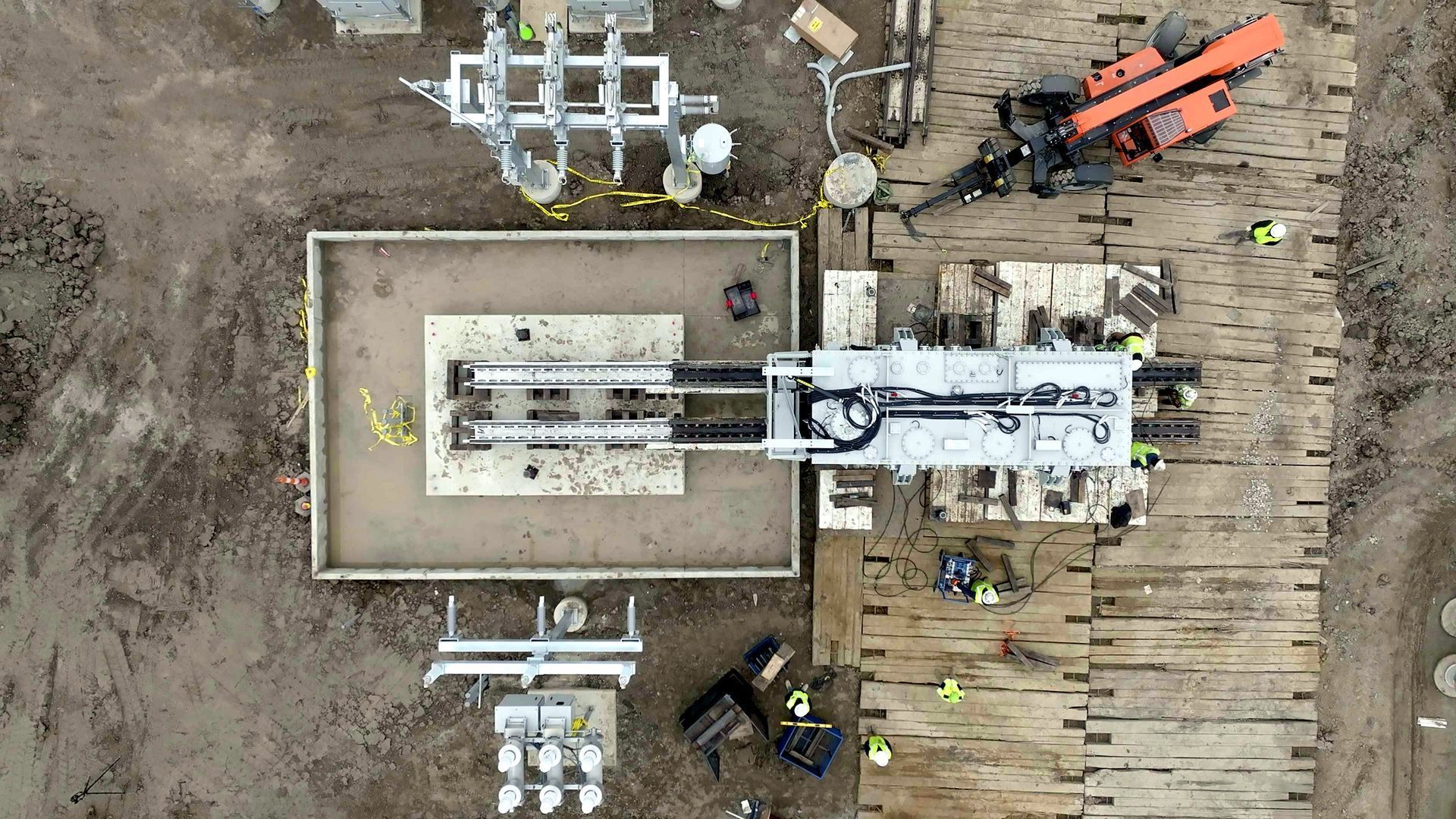
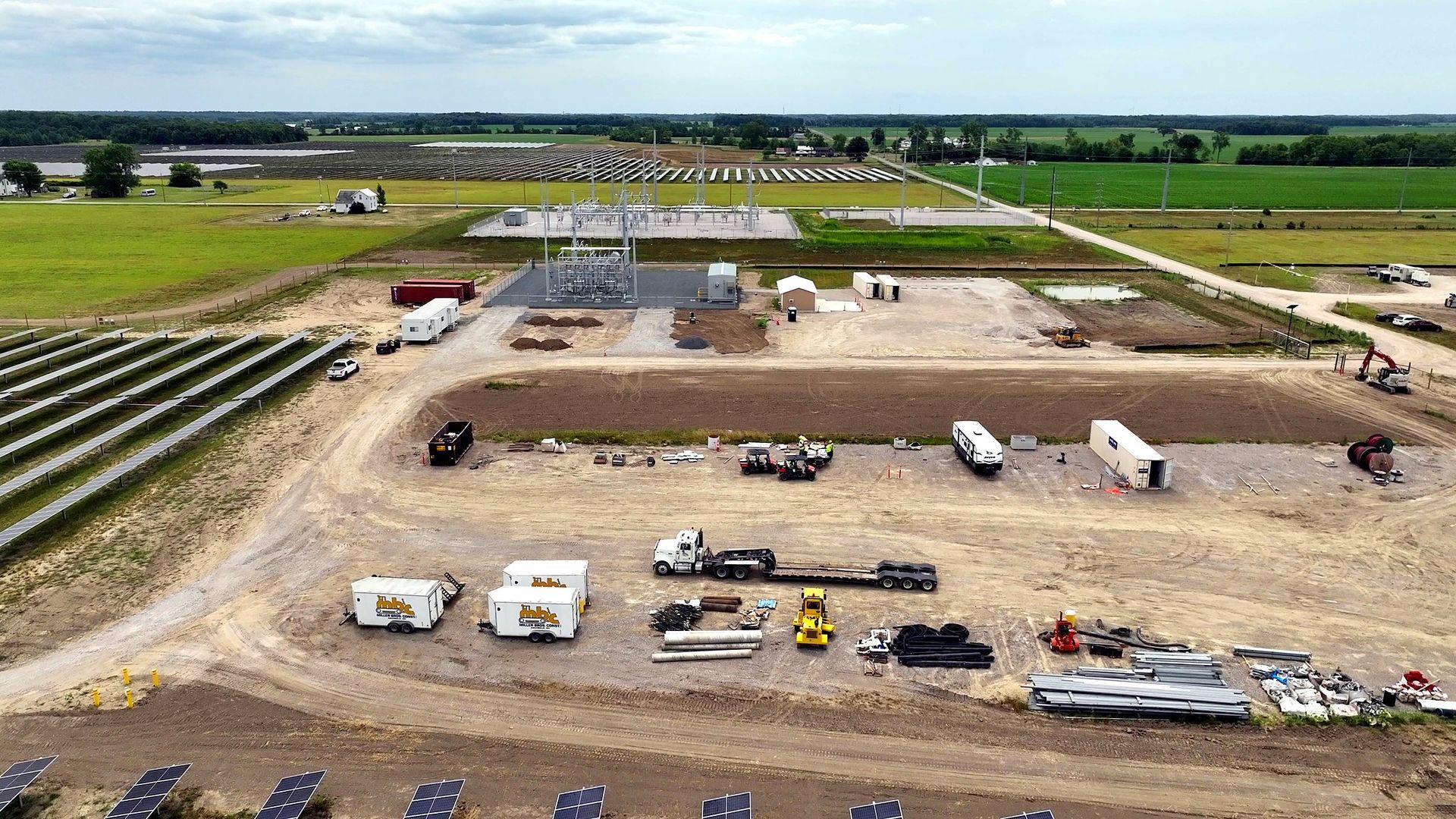
For Naturgy's 124.5 MWdc solar project in Ohio, we documented the build from the air and the ground: earthworks, post driving, trenching and cable, the substation going up and a high-voltage transformer being rigged into place. The film closes on aerial views of the finished arrays, and the same shoot produced wide, square and vertical cuts.
One shoot, three formats
- 16:9 project film (60 to 120 seconds): proposals, interviews, your website and award submissions.
- 1:1 feed cut (30 to 45 seconds): LinkedIn and Facebook.
- 9:16 vertical (15 to 30 seconds): Instagram Reels, YouTube Shorts and TikTok.
On an active site
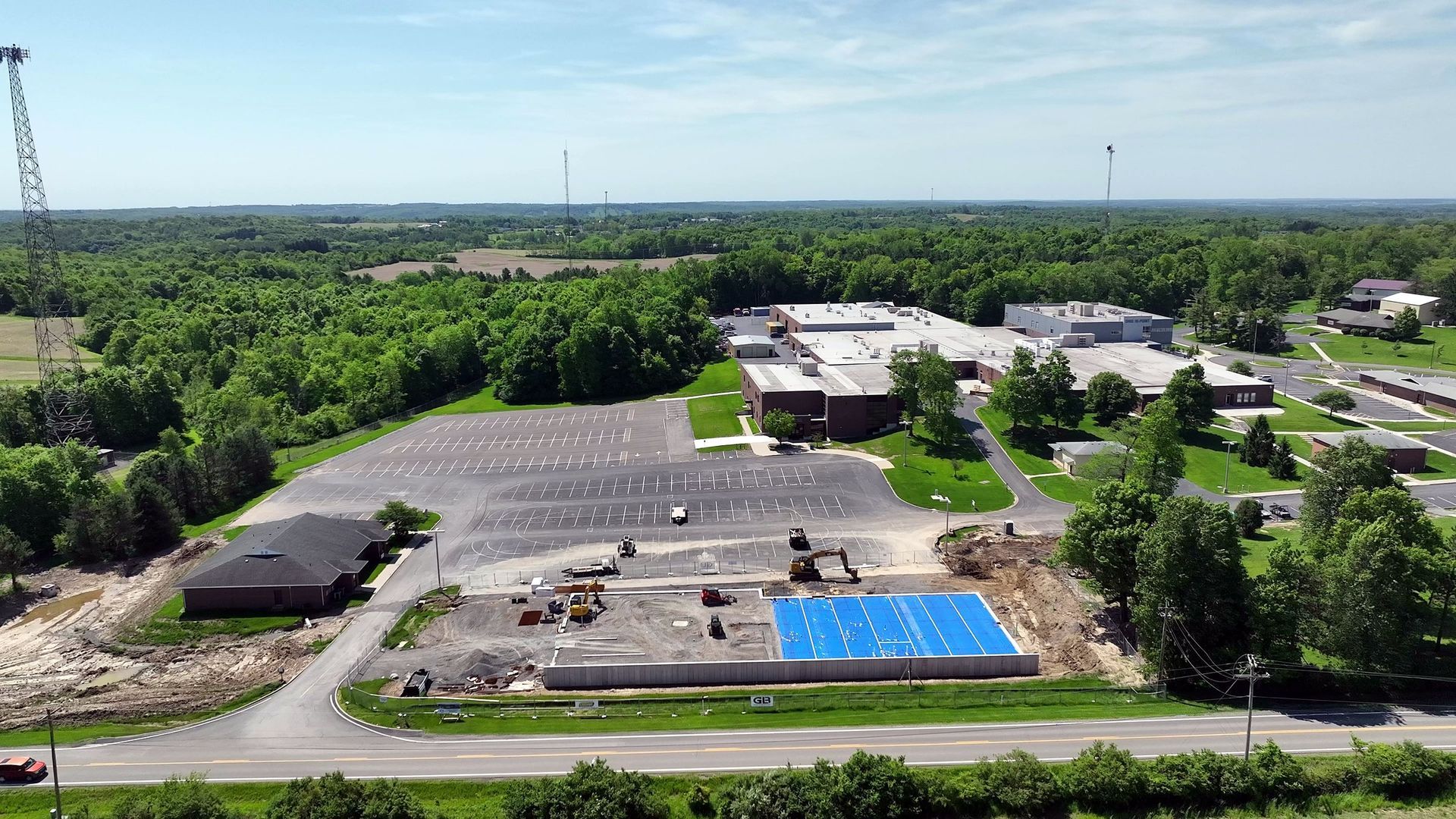
Every flight is planned under FAA Part 107 around crews, traffic and the public, with airspace authorizations handled before we arrive and a check-in with the superintendent before we fly. We carry aviation liability coverage and provide a certificate of insurance when the contract requires it.
What to have ready before the shoot
- The pursuit and its deadline, so the edit lands before the proposal is due.
- The audience: a school board, a hospital facilities team and a private developer each care about different things.
- Owner approval to film and publicize the project.
- Site contacts and safety requirements, including any badging, PPE or orientation.
- Your logo and brand colors for titles.
Mistakes that weaken a project film
- Too long. Past two minutes, most committees stop watching. Cut to the strongest 90 seconds.
- All drone, no people. A few ground shots of crews and details make the scale feel real.
- Bad light. Midday sun flattens buildings. Morning and late-afternoon light are worth planning around.
- No story. Random flyovers don't explain the project. A beginning, a build and a finish do.
- Unlicensed music. It can get a video muted or pulled from a platform. Use licensed tracks.
Frequently asked questions
What does a project film cost?
Edited project videos start at $1,750 for one shoot day, edited into a 60 to 120 second film plus social cuts. Milestone programs are quoted per project.
How long does the edit take?
Typically 5 to 7 days after the shoot, with one review round included.
Do we need the owner's permission?
Usually, yes. Check your contract and the owner's policy on publicizing the project before you plan a film around it.
Can you use footage we already have?
Yes. We can cut existing footage together with new aerials, as long as it is in a usable format and resolution.
Have a pursuit coming up?
Tell us the project, the deadline and where the film will run, and we'll plan the shots and send a fixed price. Request a quote or call (614) 622-8786.